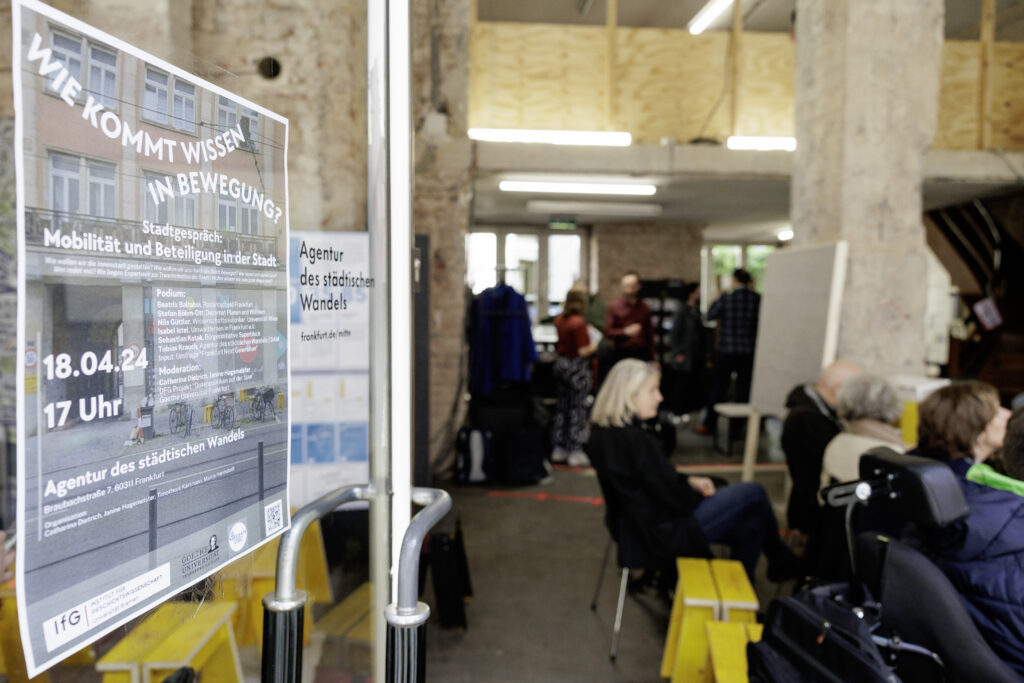
On 18 April 2024, the Agency for Urban Change (Agentur des Städtischen Wandels) opened its doors and invited the people of Frankfurt to a discussion on mobility and participation in the city. The headline was: ‘How does knowledge get moving?’ This free and public event was organised in close cooperation with several research projects and institutions.
The organising team consisted of Martin Herrnstadt, head of the international research network “Global Cultures of Enquête: Towards a Praxeology of Surveying (17th – 21st Century)” at the Institute of History at the University of Bremen, Timotheus Kartmann with his research project “Das soziale Museum“ and Janine Hagemeister and Catharina Dietrich from the project „Tracing Data Politics“ . The aim was to bring together different positions and perspectives from experts in urban society, academia and administration and to initiate a dialogue between them.
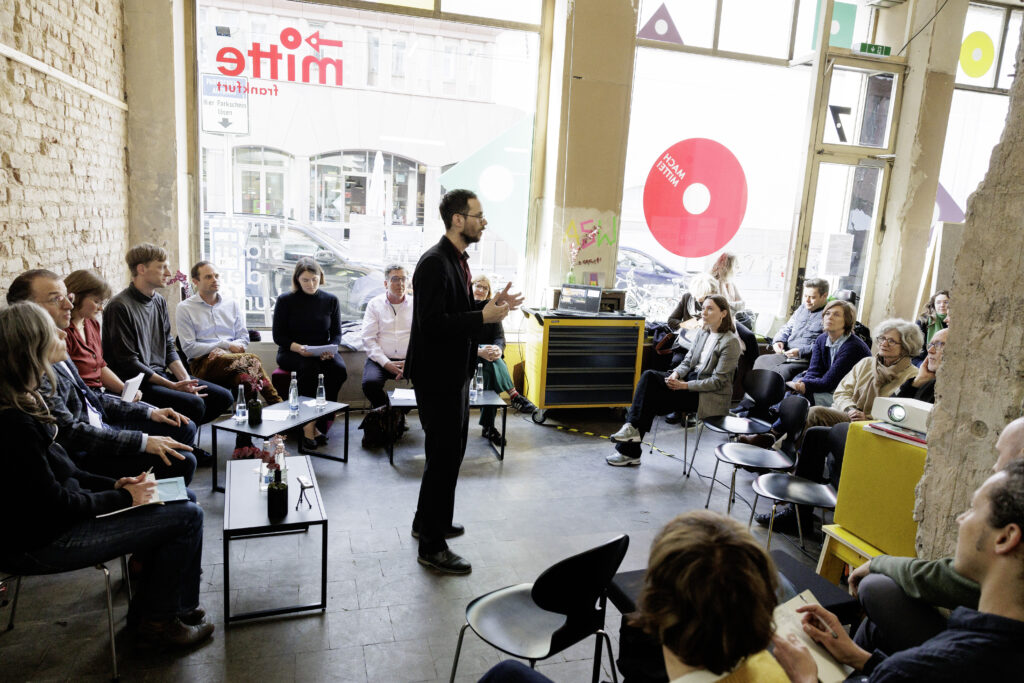
Johanna Lanio from the Polytechnic Society kicked things off with a short presentation of the ‘Frankfurt Next Generation’ survey. This survey was aimed at users of digital platforms and was designed as a low-threshold participation opportunity. We then moderated a panel discussion in which the invited experts reported on their experiences with participation processes and knowledge production in the context of urban development.
Isabel Istel from the Umweltlernen in Frankfurt e.V. association provided exciting insights into the participation projects with children and young people that were part of the process of creating the Mobility Master Plan. The projects, in which schools in Frankfurt were involved, met with great approval both on the panel and among the audience. Several voices from the audience emphasised that such formats should be offered more frequently in order to give young people the opportunity to actively shape their city. Tobias Krauch presented the participation projects of the German Architecture Museum and the Agency for Urban Change and explained how real-world laboratories are used to initiate participation in various urban spaces and to test new forms of dialogue.
Nils Güttler supplemented these practical experience reports with a scientific classification. As a science historian at the University of Vienna, his research focuses on „counter-knowledge“ and participation, among other topics, and in the panel discussion he linked the findings from his historical research with current issues. He drew parallels to the protests against the expansion of Frankfurt Airport in the 1980s, during which citizens produced their own knowledge to challenge hegemonic structures. At the same time, he pointed out that the framework conditions for participation and its political significance have changed since then. Today, the integration of knowledge from urban society is much more self-evident.
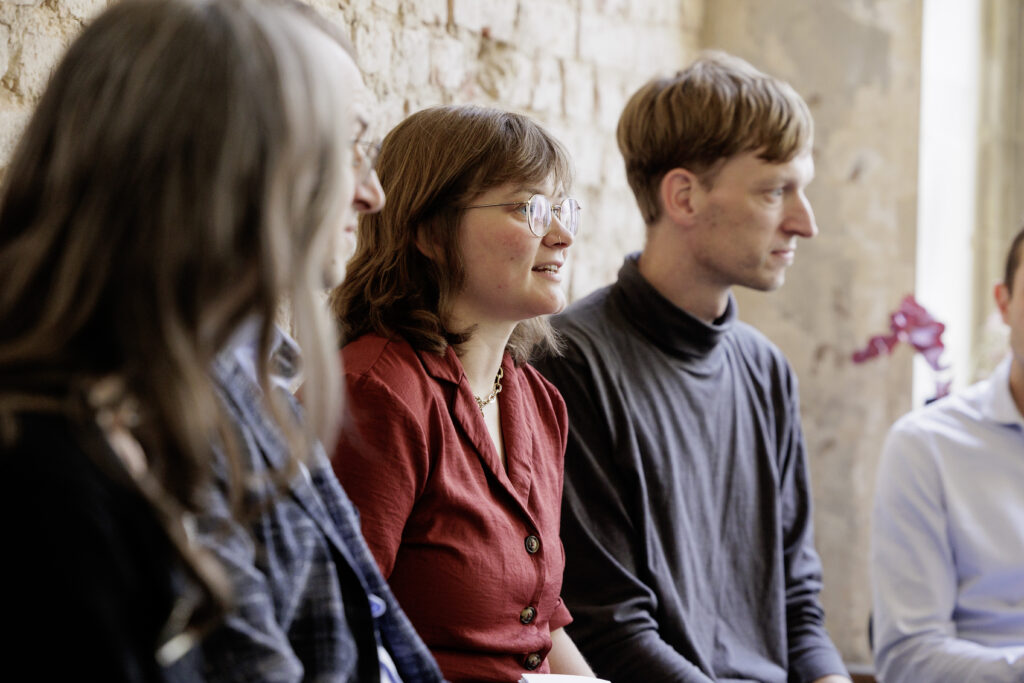
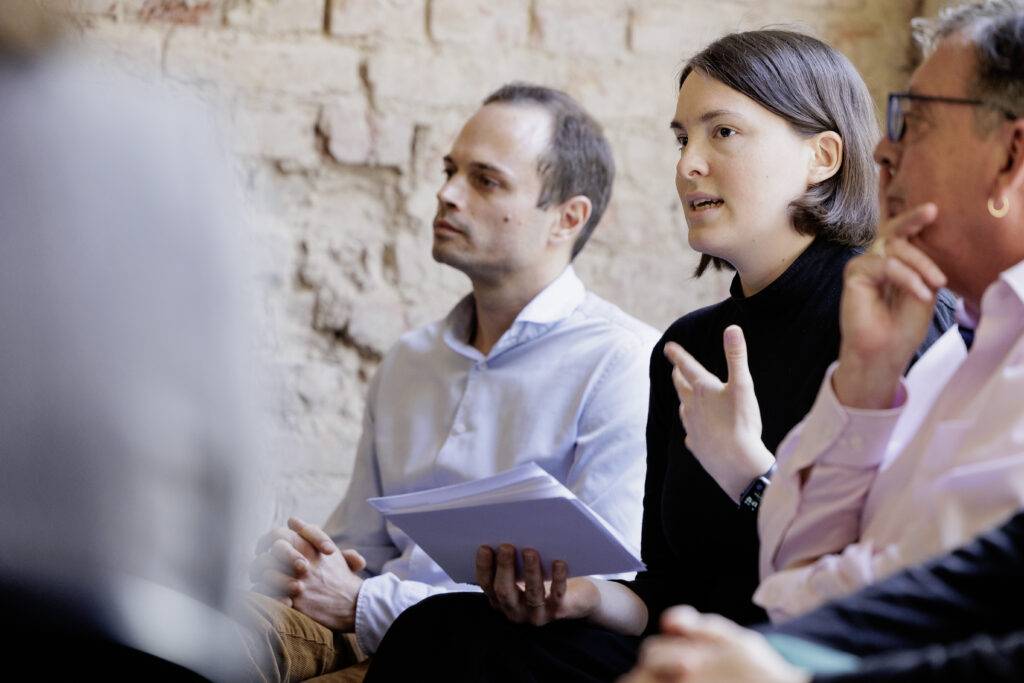
During the discussion, it became clear that participation brings not only opportunities but also challenges. Sebastian Kotek from the Superblock Initiative in Bockenheim and Beatrix Baltabol from Radentscheid talked about what voluntary work can achieve and what support initiatives need. Stephan Böhm-Ott from the Department of Planning and Housing was also present as a representative of the city and enriched the discussion with his views on the possibilities and impossibilities of urban planning.
Read more
Isabel Istel spoke about the difficulties that become particularly apparent when working with teenagers. She described how important it is for young people to experience democracy through participatory projects. However, she also addressed the frustration that arises when simple requests, such as the installation of a zebra crossing, take a long time to be implemented – often so long that by the time they are finally completed, the young people have long since changed schools. Several panel guests emphasised that participation projects should be made more visible in order to promote the exchange of different perspectives and achieve greater impact in the long term.
The vibrant audience discussion formed the centrepiece of the evening. Numerous visitors contributed their own experiences and enriched the debate with their perspectives. As the panel was not able to reflect the diversity of Frankfurt’s urban society, it was particularly important to us to give all voices plenty of space. We were delighted that a representative of the Frankfurter BehindertenArbeitsGemeinschaft (FBAG) was also present and used the public platform to voice his criticism of urban planning processes.
After the official part of the event, many guests stayed for a relaxed chat over drinks. In this relaxed atmosphere, numerous conversations developed and new contacts were made.
An exhibition was also set up in the room, visually presenting various aspects of the participation projects. Large posters showed the results of youth participation in the Mobility Master Plan and drafts of the Radentscheid initiative. The Superblock Bockenheim citizens’ initiative presented data that its members had collected in OpenStreetMap. This included maps of pavement widths and parking regulations, which had been meticulously recorded by the activists.
The evening was rich in insights and changes of perspective for us. The event not only brought together different actors, but also showed how much knowledge and commitment there is in urban society.